Showing posts with label how-to. Show all posts

Tuesday, June 7, 2016

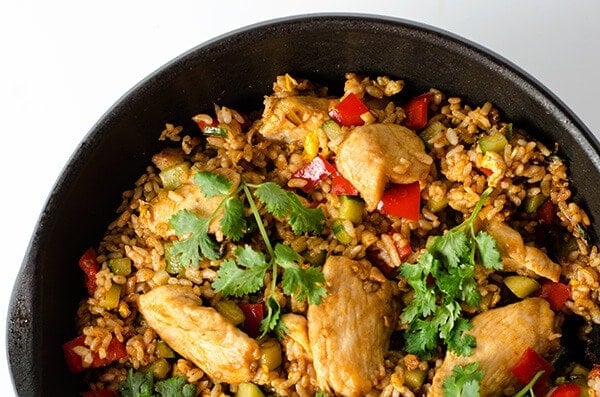
How to Season Cast Iron Pans | omnivorescookbook.com
I used to cook with a heavy cast iron wok back in China. After moving to the US, I needed to change my cooking habits, because our electric stove doesn’t generate enough heat for my flat-bottomed wok.
I’ve been cooking with a heavy nonstick skillet most of the time and I love it. However, it does not give the food the beautiful char the way a cast iron wok does. Sometimes the flavor dimensions of a stir-fry fall flat, so I end up using a lot of sauce just to make the dish taste right.
Then, I discovered the Lodge Cast-Iron 5-Quart Dutch Oven. I got hooked immediately and started to cook everything with it.  Unlike the enameled dutch oven that I previously used, the new one reminds me of the goodness of wok cooking. It heats up within a few minutes, even on an electric stove. It holds heat even as I continuously add things into it, and I can hear the vibrant sizzling throughout cooking. It browns the food in half the time of the enameled dutch oven.
Needless to say, I’ve been cooking all my stews in this cast iron pot. Sometimes I even use it to stir-fry food. Right before writing this post, I placed an order to get a Lodge 12-inch skillet just for stir-frying.
If you properly wash and store a cast iron pan, it will last forever. Even if you mess it up or let it rust, you can easily bring it back to life.
How to Season Cast Iron Pans | omnivorescookbook.com

A few quick tips on cast iron care

  1. Season a new cast iron pan, even if the pan comes pre-seasoned. It improves the seasoning of the pan so it becomes nonstick really quickly.
  2. After seasoning your new cast iron pan the first time, you should rub a thin layer of oil onto the surface before storing. After several uses, a natural patina will develop, so you can skip this step and store it directly.
  3. Never wash a cast iron pan with soap or put it in the dishwasher.
  4. To clean a cast iron pan, rinse it briefly with hot water right after cooking, and use a plastic or nylon brush to scrub the surface until clean. Do not worry if you hear a loud sizzling when the water hits the hot pan. While this sound means you’re destroying a nonstick pan, your cast iron pan will be just fine.
  5. Never soak a cast iron pan in water. It will rust very quickly. If you find the pan difficult to clean (usually after you’ve burnt your food or forgotten to clean the pan while it was still hot), watch the short video below to learn how to do it.
  6. Always dry all surfaces of the cast iron pan with a clean dish towel after cleaning, to prevent rusting.
  7. If your cast iron pan is partially rusted, use sandpaper to remove the rust, and re-season it (according to the instructions below). Rinse and rub it with oil. Repeat the whole process if necessary.
  8. Educate your family members on cast iron pan care, to prevent trouble in the future.
  9. If you suspect your cast iron pan might be completely ruined, it isn’t. Watch this video to learn how to restore it.


Next, I’ll show you how to season a cast iron pan using my newly purchased Mr. Bar-B-Q Cast-Iron Wok.


How to season cast iron pans

Tools and equipment

Dish detergent
Sponge
Clean dry kitchen towels (or paper towel)
Vegetable oil (do not use butter or olive oil)
Oven
How to Season Cast Iron Pans | omnivorescookbook.com

Instructions

1. Preheat oven to 170 degrees C (350 F).
2. Wash the cast iron cookware with hot water and detergent. Scrub with a sponge to remove the protective coating. You can use detergent to clean the wok prior to seasoning. But if you’re seasoning a pre-seasoned pan, just use hot water to rinse it.
How to Season Cast Iron Pans | omnivorescookbook.com
3. Rinse and dry it thoroughly with a kitchen towel.
How to Season Cast Iron Pans | omnivorescookbook.com
4. Pour 2 to 3 tablespoons of vegetable oil into a small bowl. Dip a piece of paper towel into the oil and rub a very thin layer of it onto the surface of the cast iron cookware. Do not use too much oil.
How to Season Cast Iron Pans | omnivorescookbook.com
5. Line a baking sheet with aluminum foil and place it on the bottom rack of the oven (to catch dripping oil).
6. Place the cast iron pan on the middle rack, upside down. This way, the oil won’t accumulate in the bottom of the pan or prevent any part from seasoning. Open your windows and turn on some ventilation. It’s gonna smell. Let it bake for 1 hour.
How to Season Cast Iron Pans | omnivorescookbook.com
7. Allow the pan to cool completely. Use oven mitts (just in case) to remove the pan from the oven.
8. Wipe off any excess oil with a clean paper towel. Now the surface of the pan should be shiny, smooth, and non-stick. The surface shouldn’t feel sticky (usually caused by rubbing on too much oil).
How to Season Cast Iron Pans | omnivorescookbook.com

Cast iron pan care and storage

1. After cooking with the cast iron pan, always rinse it with hot water and scrub it with a plastic or nylon brush. The pan will be very easy to clean if you wash it while it’s hot, right after cooking. Do not use detergent or soap or wash the pan in a dishwasher. It will remove the seasoning. If food sticks to the pan and won’t come off, do not soak the pan in water. Watch the video in the post to learn how to clean the pan if food sticks to it.
2. Apply a thin coat of oil prior to storing.
3. After using a cast iron pan repeatedly, a natural patina will develop and you won’t need to rub oil onto it prior to storing.
4. Store the pan in a dry place.
1

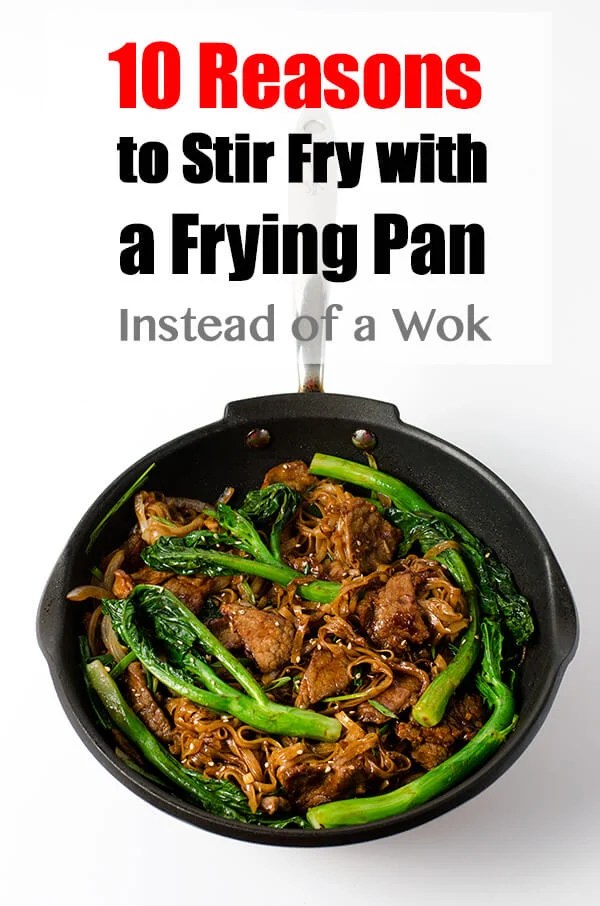
10 Reasons to Stir Fry with a Frying Pan Instead of a Wok  | Omnivore's Cookbook
Do you like stir fried food and want to cook it at home with minimal equipment? Are you afraid of trying out stir fry recipes because you don’t own a wok? Do you hate cooking with a wok, because the smoke sets off your fire alarm all the time? If you answered yes to any of these questions, this article will be very helpful to you.
No matter whether searching on the internet or browsing through cookbooks, the word “wok” will jump out every time. Everyone seems to claim it’s necessary to own a wok and that using a wok is the only way to cook good stir fried food. Well, I really doubt that.
Don’t get me wrong. I grew up in China and my family uses a wok to cook every day. I know how to use a wok and I do like to make stir fry with it. However, I prefer to use my heavy bottom nonstick frying pan to cook most of the stir fried dishes on a daily basis. Below are the 10 reasons you should use a frying pan to make stir fried dishes instead of a wok.

1. You don’t need to buy a wok and extra equipment

A wok might not be expensive. But why buy it and take up space to keep it in any case, if you can create stir fried food with the kitchen wares you already have? You should also consider the extra equipment you have to purchase with the wok, which includes a metal turner, a wok lid, and a wok ring (if you use the traditional round bottom wok).

2. You don’t need to take extra care to store the wok

A standard cast iron wok will get rusty if you don’t use it over time. You have to rub it with oil regularly to keep it in good shape. Chances are, when you finally decide to cook a stir fried dish and go to the garage to fetch the wok, it is already unusable.
10 Reasons to Stir Fry with a Frying Pan Instead of a Wok | Omnivore's Cookbook
A frying pan can generate great stir fried dishes, too.

3. A frying pan can generate great stir fried dishes, too

I won’t say you could replicate 100% of dishes using a frying pan to get the exactly the same result, as you’d get using a wok. But you can make delicious and authentic stir fried dishes with a frying pan. If you look at the black pepper steak or fish fragrant eggplant, you will find that a frying pan can create authentic Chinese stir-fry easily.

4. A nonstick frying pan uses less than half the oil a wok does

You will only need half or even one third the oil if you’re cooking stir-fry with a nonstick frying pan. Believe me, even if you heat the wok very well and follow all the instructions from the cookbook, certain items will still stick to the wok and get burnt. Moreover, not all stir fry requires a super high oil temperature. You could easily handle with them with a non-sticky frying pan and use much less oil. Try to cook vegetable and ham fried rice with a wok, and you will be surprised how much oil you’ll need to use to keep the rice from sticking to the wok.
If you’re worried about safety issues surrounding teflon material, I have some good news for you. New nonstick frying pans have progressed a lot. They can stand very high heat (most of them can be heated up to 500 degrees F, while most stir fried dishes require 400 F heat or less). They can coat with oil better and last a very long time.
Sweet Sour Tofu | Omnivore's Cookbook
A frying pan can do what a wok cannot.

5. A frying pan can do what a wok cannot

Believe it or not, a frying pan actually can do more than a wok. If you look atsweet and sour tofu or mapo tofu, you will find that a flat bottom pan can easily deal with tofu without breaking the pieces apart.

6. Easier for beginners

You need to heat up a wok to very high heat no matter what dish you’re cooking, and cook it within a very short span of time to achieve good results. If you look at the real chefs who work in Chinese restaurants, you will be surprised that it only takes a few seconds to sear the meat or mix in the sauce (You will also be surprised at the huge amount of oil they use). A frying pan will take more time (for example 30 seconds VS. 10 seconds) to completely cook meat/veggies and is thus easier for beginners to learn and get used to.

7. Safer for beginners

If you’re not familiar with cooking with a wok, the temperature of the oil will quickly get too high to handle. Again, you have to be heat up the wok very well before cooking, even for some food that doesn’t require high heat. The heated wok will get out of control if you don’t adjust heat constantly, and most of it requires experience and is not listed in the recipe.
The Right Way to Heat up a Wok | Omnivore's Cookbook
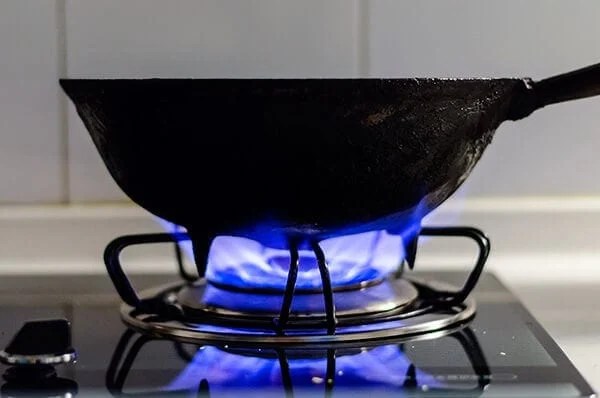
The right way to heat up a traditional wok is on a gas stove top.

8. A wok doesn’t work well on an electric stove top

A traditional round bottomed wok is not designed to cook on an electric stove top and you need to get a wok ring. However, a wok ring does not hold the wok as steadily as a flat one. Moreover, the wok will be too far away from the heat source, so the upper metal of the wok won’t heat up well enough. A flat wok is an alternative, but it requires more cooking oil and the upper third still won’t heat up so well. On the other hand, you don’t need a high power gas stove to cook with frying pan and it will heat up very well.

9. Easier to clean up

Even a heavy frying pan is still lighter than a wok and can be easily cleaned up in a dishwasher. If you use a nonstick frying pan, you should not put it in a dishwasher, but it is much easier to clean because of its material.
To clean a wok, you have to do it immediately after cooking, while it’s still hot. You cannot use detergent with a wok, and you cannot soak it in water (the cast iron will get rusty). If you accidentally burn the food or don’t clean up the wok on time, you’ll be in a lot of trouble.
Wok Air | Omnivore's Cookbook

10. A frying pan won’t set off your fire alarm so often and make your house unlivable

If you use a wok to cook stir fried dishes properly, it will get so smoky and will set off your fire alarm constantly. Unfortunately, there is not much you can do, because wok hei (“wok air” by direct translation) is the only reason a wok works and makes the food taste so good. Wok cooking is so smoky and smelly, which is why Chinese families don’t have open kitchens (we turn on the exhaust fan, open the kitchen window, close the kitchen door, and the living room still smells like a restaurant). Cooking with a wok every day in your big open kitchen will cause you to have to repaint the walls every 3 months and the connected rooms unlivable. No kidding.
I admit, to stir fry with a frying pan generates smoke as well (in order to make better food). But the smoke is not as abundant as with a wok and you can use an exhaust fan to solve most the problem.

Final thought

A wok might be nice to have, as long as you like cooking Chinese food and want to prepare it authentically. It requires some practice and getting used to, but you will be amazed by the great smoky flavor of the stir fried dish that cooked with a wok. On the other hand, if you only cook Chinese food occasionally, only have electric stove at home, or want to use less oil in your cooking, I recommend you to invest in a high quality frying pan. Besides stir fry, a heavy bottomed frying pan could help make almost all your dishes taste better.

Now it’s your turn…

Do you prefer to use a wok or a frying pan? Leave a comment below to share your experience with us!
0

Author

authorHi, I'm Lily from China. Welcom to my kitchen where I show you how to cook authentic chinese food, bring you the easy and healthy chinese recipe. Subscribe to my channel and be the first to watch new clips as they get served up. Enjoy!
Learn More ?